Nuclear threat & AI · Part 2
What Could Unite the Nations of the World?
By Michael · November 2026
Prepared with the help of AI research.


Nations rarely unite because of a good idea. They unite because of a shared danger, a shared disaster or a clear shared profit, and usually more than one at once. Three examples show the pattern.
The American states
After independence, the thirteen states lived under the weak Articles of Confederation. The national government could not tax or raise an army that could protect them, and the states fought trade wars with each other. Shays' Rebellion (1786–87) frightened the elites, and Britain and Spain were circling. The Constitution of 1787 came from fear of falling apart and being picked off one by one, not from mutual affection.
Europe
The European Union came from catastrophe. Two world wars in thirty years convinced France and Germany to tie their coal and steel together, so another war between them would be physically impossible. That was the logic of the 1951 Coal and Steel Community. An outside threat (the Soviet Union), American pressure and Marshall Plan money, and a steady economic payoff kept it going. It took 70 years, one small step at a time.
The former Soviet republics
Post-Soviet unity is partial and contested. The Commonwealth of Independent States is loose, and the Russia-led Eurasian Economic Union includes only a few countries. Georgia left the CIS, Ukraine has broken away and is at war with Russia, and the Baltic states joined the EU and NATO. What holds the remaining ties together is mostly economic dependence and the weight of one dominant partner. Unity can be voluntary or coerced, and the two last very differently.
The five ingredients of unity
- A threat everyone feels, ideally from outside the group
- A fresh memory of disaster that makes "never again" personal
- Concrete gains people notice in daily life: trade, money, security
- Gradual steps, so no one gives up too much sovereignty at once
- Someone to lead or pay the cost at the start
Why the whole planet is so hard
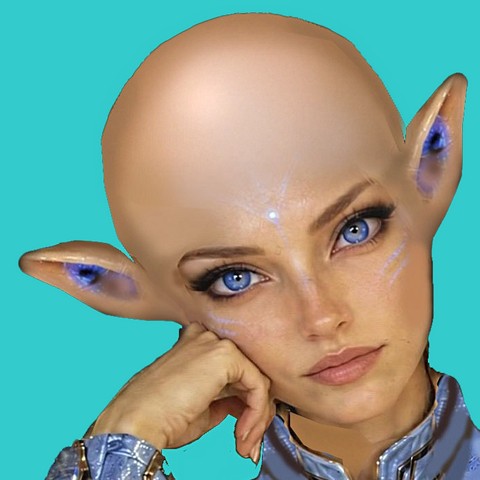
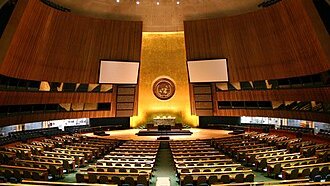
The world fails the first test: there is no "outside." Ronald Reagan once mused at the UN that humanity's differences would vanish if we faced a threat from another world. He was half joking, but he named the real problem. Without an external enemy, nations treat each other as the threat.
The realistic candidates are dangers no country can escape alone: nuclear war, climate collapse, pandemics, and advanced AI that escapes human control. But COVID showed the hard lesson. It was a planet-wide threat, and countries mostly competed for vaccines. A shared danger unites people only if they believe they will sink or swim together.
Precedents that offer hope
| Case | Year | What it shows |
|---|---|---|
| Smallpox eradication | 1980 | The US and the USSR cooperated at the height of the Cold War. |
| Montreal Protocol (ozone layer) | 1987 | The first treaty ratified by every UN member state: clear science, an affordable fix, a visible danger. |
| After the Cuban Missile Crisis | 1962–63 | A near nuclear war led within a year to the Moscow–Washington hotline and the atmospheric test ban treaty. |
The lesson without the disaster
Humanity has almost always united after catastrophe, not before it. The UN came after World War II, the EU after the ruins of Europe, arms control after Cuba.
Could AI give us the lesson without the disaster? Picture AI systems that model a nuclear exchange so credibly, and detect dangerous moves so early and neutrally, that leaders feel the "never again" moment in advance.
One caution: unity built on fear fades when the fear does. The Montreal Protocol worked because it also offered a practical, affordable solution. A warning alone will not hold nations together. They also need a common tool they all trust and benefit from.
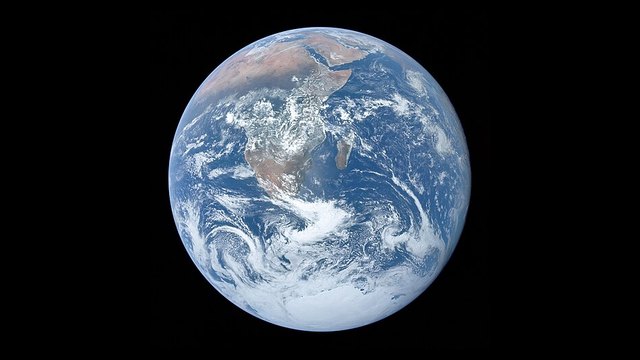
Thumbnail photo: "The Blue Marble," Earth seen from Apollo 17, 1972. NASA, public domain, via Wikimedia Commons.

Comments
No comments yet. Be the first.
Leave a comment
Every comment is reviewed before it appears. Your email is never shown. Please follow the community rules.