


Nuclear threat & AI · Part 1
Is the UN Collapsing or Reforming?
By Michael · November 2026
Prepared with the help of AI research.


The United Nations is not heading for collapse, and it is not heading for real reform either. The likeliest path is a third one: it gets poorer and leaner, and splits into parts that still work and parts that don't.
First, the UN is not entirely powerless
The General Assembly, where all 193 countries meet, can only make recommendations. But the Security Council is different. Under the UN Charter its decisions bind every member, and it can impose sanctions or authorize force.
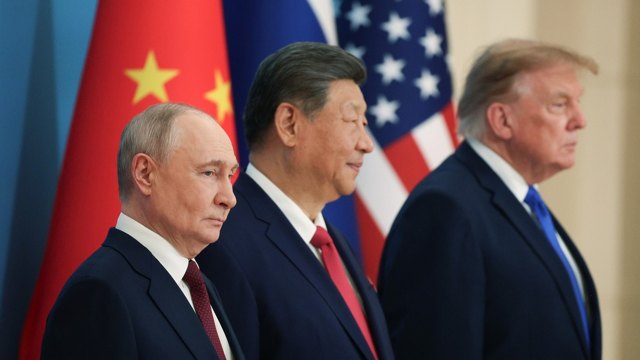
The real problem is not that the UN has no power. The power sits with 15 countries, and any one of the five permanent members (the US, Russia, China, the UK and France) can block it with a veto. That weakness was built in on purpose in 1945.
Money is the most immediate pressure
The UN is in the worst funding crisis in its history, driven largely by unpaid US dues. Its 2026 operating budget is $3.45 billion, down from $3.72 billion, and about 2,900 positions are being cut. Agencies like the World Health Organization are making deep cuts of their own. Secretary-General António Guterres has said the crisis will be solved only when countries pay what they owe, in full and on time.
Reform is real, but administrative
Guterres's "UN80" initiative is merging agencies, cutting duplication and moving offices to cheaper cities. His own progress report this year called the status quo "untenable." But UN80 does not touch the core problem: the veto.
The Security Council is stuck, so countries work around it
- Since 2022, the General Assembly must debate every veto within 10 working days, so whoever casts one has to explain it in public.
- France and Mexico are urging the permanent members to give up the veto voluntarily in cases of mass atrocities.
- An older tool, "Uniting for Peace" (1950), lets the General Assembly take up a crisis when the Council deadlocks.
Rival structures are appearing
In January 2026, President Trump launched a "Board of Peace," first for Gaza and then with wider ambitions that critics feared would rival the UN. The other permanent members and major powers like Japan and Germany kept their distance. Supporters of the administration argue the UN is bloated and that outside pressure may force it to act.
The nuclear warning sign
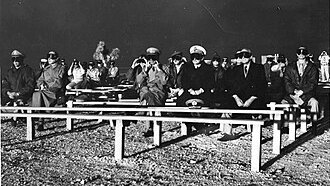
The Nuclear Non-Proliferation Treaty is the main agreement for stopping the spread of nuclear weapons. In May 2026 its review conference failed for the third time in a row. The last agreed outcome was in 2010. Yet one idea gained ground even as the talks failed: support for nuclear risk reduction and crisis communication tools.
Why it won't collapse, and why it won't be rebuilt
The League of Nations died because great powers walked out. The UN survives partly because the veto gives the five biggest powers a privilege they do not want to lose. But changing the Charter needs those same five to agree, and they would be voting to reduce their own power.
What to expect instead: a poorer UN whose core security role keeps weakening, while its technical parts keep working because everyone needs them. Nuclear inspections, aviation and shipping rules, humanitarian aid and disease tracking will survive. Big security questions will move to smaller groups and coalitions.
Since no single authority can stop a nuclear crisis, the useful tools are ones that are neutral, trusted and fast. That is where AI could serve as an early-warning layer, and where the IAEA may be a more natural home than the Security Council.
- UN News: UN chief warns unpaid dues near $1.6 billion
- ThePrint: UN on survival mode as US doesn't pay dues
- UN: UN80 report warns status quo "untenable"
- UN News: Veto power "poster child" of global gridlock
- AP: Board of Peace sparks new support for the UN
- IPS: Nuclear nonproliferation outcomes stall
- IST: RevCon ended without consensus, risk reduction did not
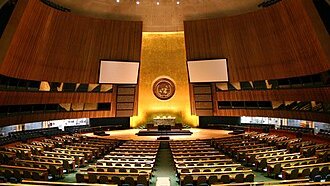
Thumbnail photo: United Nations General Assembly hall, by Patrick Gruban, cropped, CC BY-SA 2.0, via Wikimedia Commons.

Comments
No comments yet. Be the first.
Leave a comment
Every comment is reviewed before it appears. Your email is never shown. Please follow the community rules.