




Justice · Opinion
Educational Instead of Correctional
By Michael · November 21, 2026
Prepared with the help of AI research.
I grew up in an orphanage in the Soviet Union, in Kyrgyzstan, a small republic on the border with China. One face from those years stayed with me: Angela Davis. Soviet newspapers and posters showed her everywhere, a proud young woman with a famous hairstyle, "a political prisoner of the American imperialists." That was all we were told.
Many years later I came to the United States and learned that she was alive, a university professor, and that her real story was far more complicated than the Soviet posters.
Who Angela Davis really is
Angela Davis was born in 1944 in Birmingham, Alabama. In 1969 UCLA hired her to teach philosophy, and the University of California's regents fired her because she was a member of the Communist Party. She worked closely with the Black Panthers in Los Angeles. In 1970 she was charged in connection with a deadly courtroom escape attempt, spent about a year and a half in jail, and in 1972 a jury acquitted her of all charges.
She later taught for many years at the University of California, Santa Cruz, and twice ran for vice president on the Communist Party ticket. In 1997 she co-founded Critical Resistance, a movement that wants to abolish prisons altogether.
I do not share her politics, and I do not go as far as she does. But one part of her thinking struck me deeply: that the way we punish people is a choice, and we can choose differently. Since then I have studied prison systems in the United States and other countries, and I keep coming to the same conclusion.
My idea: educational instead of correctional
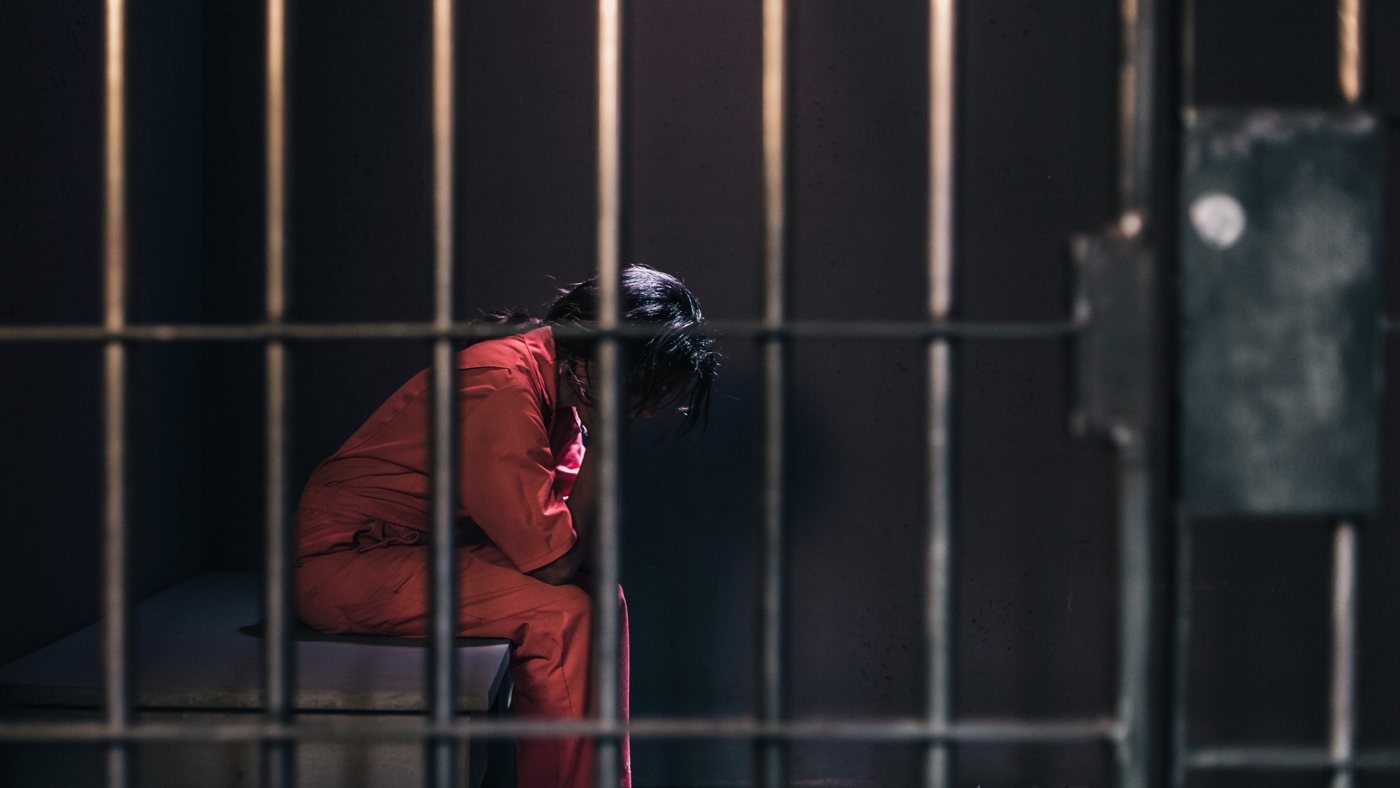
Modern societies still answer most crimes the same way they did centuries ago: lock the person in terrifying conditions and hope fear will change him. It rarely does.
I propose a different kind of place. It is still closed. A person who committed a crime still loses his freedom for a time. But instead of empty years behind bars, every day is a school day:
- Human history, to understand where cruelty and violence lead, and what humanity has built despite them.
- Literature, to live other people's lives through great books, and to learn to feel their pain.
- Exams that must be passed before release. Not time served, but knowledge earned.
The goal is not to break a person, but to rebuild one. Someone who leaves this school should know the purpose of his life, and should carry out with him the greatest treasure of human nature: compassion and empathy.
What the evidence says
- Education cuts crime. The largest study of prison education, by the RAND Corporation (2013), found that prisoners who took part in education programs had 43% lower odds of returning to prison. In plain numbers: 30% came back, compared with 43% of those who did not study.
- It saves money. RAND found that every $1 spent on prison education saves $4 to $5 in prison costs within three years.
- Norway already works this way. All Norwegian prisons offer education, job training and treatment. The average prison stay there is six to seven months, compared with almost three years in the United States.
- America is starting to move. In July 2023, people in prison became eligible again for federal Pell Grants to pay for college, for the first time since a 1994 ban.
The other side of the argument
Critics raise fair questions, and they deserve an answer. Victims and their families want justice, not a classroom for the person who hurt them. Some people are dangerous and must be kept away from society, whatever they study. Empathy cannot be forced by an exam. And rehabilitation is expensive: Norway spends about three times as much per prisoner as the United States. The gap in results is also smaller than headlines suggest: counting only returns to prison, about 25% in Norway against about 29% in the U.S.
My answer: the locked door stays. Accountability stays. What changes is what happens behind the door. If a person must spend years inside, those years can produce either a more dangerous criminal or a better neighbor. We pay for both. Only one makes us safer.
Prison teaches fear. School teaches understanding. Let's choose school.
What do you think? Share your view with Alien Here. And if you believe a small mistake should not ruin a whole life, sign our petition.
Sources: Angela Y. Davis biography · HISTORY.com on Angela Davis · RAND, Evaluating the Effectiveness of Correctional Education (2013) · NBER, The Benefits of Rehabilitative Incarceration · NPR, In Norway, a Prison Built on Second Chances · Vera Institute on Pell Grants
Comments
No comments yet. Be the first.
Leave a comment
Every comment is reviewed before it appears. Your email is never shown. Please follow the community rules.